A well-run boutique short-term rental is one of the most rewarding small businesses a non-professional investor can own: an appreciating asset that also produces real income, in a category where small operators routinely outperform large managed portfolios.
Most first-time hosts never see that version. They buy a property in their personal name, hand the keys to a full-service manager taking a third to half of what comes in to run the listing on autopilot, and end up with a side project on cruise control instead of a business they own.
The Foundry exists for the host who wants the other version: a boutique hosting business you actually own and operate, with local execution (cleaning, on-site ops) handled by a co-host who takes substantially less — leaving the rest in your pocket.
You front-load the work. You pocket the difference.
Importantly, the path from "I'd like to own a vacation rental" to "I'm operating a successful STR business" is full of decisions and challenges nobody warns you about. It's a lot of expertise to acquire and a lot of hours to spend, especially on the side of a full-time job.
Each player you'll encounter owns a narrow slice of your timeline and walks away when their slice is done. None of them are paid to make sure your business — the entity, the financials, the brand, the systems, the regulatory filings — is built right before your first guest arrives.
Two decisions sit at the top of this work. The founder decisions — capital exposure ceiling, entity, financing, deal thesis — determine what kind of business you're building and what you're willing to risk to build it. The market decision determines whether the business can succeed. Get either wrong and the deal struggles.
Get the market wrong, and the deal becomes a boat anchor.
A pandemic-era coastal boom market that's since been regulated into nonviability. A Cascade-foothills town that every STR magazine has been pumping for the past eighteen months, yet is actually approaching saturation. A premium-coastal archipelago that prices most buyers out, when nearly identical revenue is achievable for half the entry cost in markets nobody's writing about.
Industry press, online communities, and AI-powered platforms lag the data by 12 to 18 months. They make money on volume, not on whether your specific deal works. A misjudged market routinely costs first-time hosts $20,000 to $40,000 a year in unrealized revenue, or worse, a property that becomes illegal to operate.
Most markets worth considering sit in one of three states. Knowing which one — before you write an offer — is the most consequential read in the home-buying process. (A market in outright decline is an obvious no-go; the interesting judgment calls are among these three.)
Highest risk, highest potential. A real read here means separating a genuine early signal from a market that will never develop.
The sweet spot: momentum is real and there's still room to run. Most first-time hosts don't know to look here until the window has narrowed.
Past peak, but not dead. Entry is still possible, but the deal thesis has to be sharper and the margin for error is thin.
Each of these people is genuinely good at their job. None of them is paid to make sure your business works.
Tools like BiggerPockets and AirDNA put real data at your fingertips. But you're paying a subscription to navigate a database that sits between you and the answer — and it won't tell you what the numbers actually mean for your specific deal.
A good broker finds you the right loan product at the best available rate, and will even help you make the case to secure it. But that doesn't mean they understand the annualized STR revenue projections for your target market.
A good agent helps you find the right house for your configuration targets and price point, and knows the local market cold. But they won't necessarily know which configurations book out first, or most, or at the highest rates during peak season.
A good manager keeps your calendar full and your turnovers clean, and takes the day-to-day off your plate. But they optimize for occupancy across their whole portfolio, not for the specific metrics that make your individual business outperform.
The Foundry closes every one of those gaps.
No one can replace you as the founder and CEO of your business. Yet even Fortune 500 CEOs rely on advisors who've done the work before.
The Foundry is structural support for first-time STR founders: a vacation rental advisor and operating partner from concept through stabilization. I'm not your agent, not your manager, and I work on a flat fee, not a percentage of your deal.
Most first-time hosts try to figure this out through subscription platforms, online communities, and AI-powered analysis tools. Those make money on your monthly fee, not on whether your specific deal works. I work the opposite way: STR-only, one host at a time, paid once.
A single bespoke engagement that meets you wherever you are in the process. The work scales to what you need, scoped together on an introductory call. Most engagements run roughly 90 to 120 days from kickoff through launch with a co-host.
What I bring to the partnership.
You're not buying a course or a subscription. You're partnering with a human who has personally walked this path — and who brings two decades of brand, product, user-experience, and financial-strategy work to the table. The house is the product. The guest is the user. Your business is the brand. The disciplines that build successful products are the same disciplines that turn a house into a hosting business.
Not everyone needs all of this. The engagement is right-sized through a gap analysis on our introductory call. Some clients use the full scope; others come in with parts of the work already done and engage me only where they have gaps. Coaching is the gap analysis itself.
For clients who'd rather have the work done for them than learn alongside it, a more hands-on consultancy engagement can be discussed directly.
Send me a property address. Within 24 hours, you'll have a two-page PDF: my preliminary thesis on why this market, why this property, why this price, paired with AirDNA's market analysis as supporting data. A focused read of the deal before you write an offer or commit to deeper work.
If we move forward into the full engagement together, the $100 credits toward your first invoice.
Full engagement pricing is discussed on the introductory call and scoped to what you actually need. Talk to Matt to start.
The upfront work — the market read, the deal thesis, the founding decisions, the systems — is how an owner-operated STR can target the strongest revenue tier for its area and price band, while avoiding the heavy management-fee drag that quietly erodes the rest.
Front-load it once. Capture the difference for years.
Combining top-tier performance with a co-host model — instead of full-service management — puts substantial money back on your side of the ledger every year. Compounded over a five-year hold, the difference reaches into six figures.
First-time hosts going it alone routinely take six months from concept to keys. With structured guidance, the same path compresses to 60–90 days, without skipping the diligence that makes the difference.
A market misread or a missed permit issue can cost $20–40k a year in unrealized revenue. In the worst case, it leaves you holding a property that's effectively illegal to operate. These are mistakes that are cheap to avoid up front and expensive to fix later.
The work pays for itself many times over within the first year — through higher revenue from a properly-positioned property, avoided cost from sidestepped mistakes, and time you don't spend learning everything the expensive way.
Performance ranges and management-fee benchmarks drawn from AirDNA, AirROI, and industry sources covering Washington State STR markets in 2025–2026. Individual results depend on property, market, and execution.
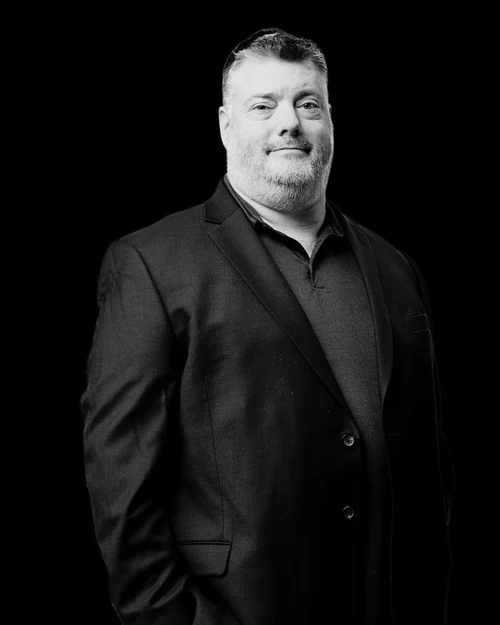
I've personally walked the full path you're considering. As the founder and CEO of Red Hearth Retreats, I formed the entity, negotiated the deal, navigated permits and zoning, vetted property managers, and modeled the economics carefully enough to know the deal worked before I closed.
Along the way, I made an offer on a house that turned out to have a permit issue my agent hadn't flagged. I caught it. If I hadn't, I would have closed on a property I couldn't legally operate as an STR — a boat anchor instead of a business. The takeaway: the home buyer owns the diligence. Nobody else is paid to.
The part I'm doing now — running the property — is the easy part. The hard part is the founding work that came before it. That's the part I help with.
The Foundry exists because most STR education online is optimized for clicks, and very little of it is built for the thoughtful first-time host trying to build a resilient business inside a real asset. The real work isn't starting an Airbnb. It's deciding what kind of business you're building, who you're building it for, and what you're willing to risk to build it.
I've spent two decades in the corporate world running brand strategy, product management, and user experience for tools used by millions of people. These aren't transferable-but-adjacent skills. They map directly onto what an STR business actually is: the house is the product. The guest is the user. Your business is the brand. The disciplines that build successful products — sharp positioning, operational rigor, financial discipline, ruthless focus on the experience — are the same disciplines that turn a house into a hosting business.
My family is in Washington State. My first STR is in Washington State. The six months of market and regulatory research I did before buying that property became the foundation of how I read this state's vacation markets. I work nationally, but my deepest expertise is here.
If you've never started a business before, never bought an investment property before, and want someone who has on your side of the table — that's what The Foundry is for.
Built deliberately, refined through execution. I care more about building a durable model than appearing finished.
A free 30-minute call to talk through what you're considering, where you are in the process, and whether The Foundry is the right fit. No charge, no pressure. If you already have a property in mind, include the address in your email and I'll run a preliminary read before we talk.
matt@strfoundry.comCurrently taking on a limited number of engagements. The Foundry is built around depth over scale.