STR Coaching Shouldn't Cost as Much as a Tiny House
Affordable, independent help for buyers evaluating one short-term rental, without a five-figure program or a stack of software subscriptions.
You have a promising idea: buy a vacation rental you can enjoy, operate and hold for the long term. So you open Google or ask an AI where to begin.
An hour later, you have more information and less certainty. One source wants to sell you revenue data. Another wants to match you with an STR realtor. A coach offers a discovery call for a program that may cost tens of thousands of dollars. Free articles explain pieces of the process, but few will tell you whether this house, in this jurisdiction, with your money and your plan, is actually a good idea.
A basic tiny house runs $30,000 to $70,000. Some STR coaching programs land in that same range, priced before anyone has looked at your specific property. The alternative most first-time buyers reach for instead is going it alone: piecing together forum threads, free calculators and a realtor's goodwill, and hoping nothing they missed shows up after closing.
That leaves first-time buyers with a lousy choice. Piece everything together while surrounded by information but short on experience and confidence, or pay for far more help than one property should require.
Affordable advice often lacks the local knowledge and judgment needed to apply it. Experienced advice is often bundled for a much bigger investor and priced accordingly. Either way, you still have to decide whether the revenue is credible, the permit is obtainable, the local manager is any good, the launch is affordable and the house remains worth owning if the rental underperforms.
You should not have to become your own full-time acquisition department or pay tiny-house money for help you do not need. There should be a practical middle: experienced, independent help sized to the decision in front of you.
The service I needed did not exist in an obvious form
I did not start STR Foundry after hiring a consultant and deciding I could do it better. I never hired one. My own acquisition revealed the gap indirectly.
Late in 2025, I took on STR acquisition strategy for myself as a full-time job. I did not have a conventional job at the time, so the commodity I had was time.
I studied housing inventory, revenue data, regulations, financing and seasonality. I called counties, property managers, lenders, inspectors and service providers. I visited the market, asked follow-up questions and built relationships with people who understood what operating there would require.
That work eventually led me to The Resthouse in Ocean Park, Washington. It also showed me how much analysis sits between finding an attractive house and deciding that it can support a viable short-term-rental business.
STR Foundry exists alongside my rental business because the work fits naturally. I operate it part time to supplement rental income and stay engaged in acquisition strategy I genuinely enjoy.
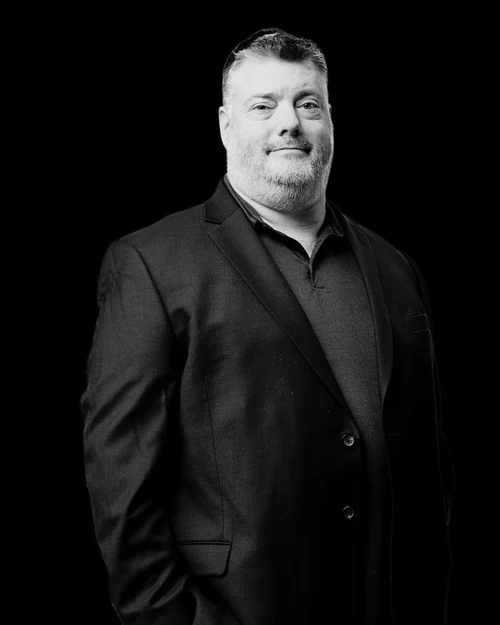
I am like the buyer I serve. I own and operate a short-term rental, and I built the Foundry to help people like me who are a little earlier in the journey. I love this work enough that I did not want to stop with my own property.
Most buyers do not have several months available to treat the search as a full-time job. They also should not need to spend tiny-house money to borrow someone else's process.
The expensive end of the market solves a real problem
National acquisition companies and coaching programs exist because the process is fragmented and time-consuming. For a busy professional building a portfolio, an expensive done-for-you engagement may be defensible. But the cost must fit the acquisition.
If a buyer has $100,000 to $150,000 available for the down payment, renovation, furniture, permits, reserves and opening costs, spending $20,000 to $35,000 on advice can consume a meaningful share of the capital before the buyer owns the house. That same money might otherwise preserve reserves, reduce debt or fund improvements guests will actually experience.
Expertise should not be free. The engagement should still be proportional to the decision.
An STR realtor solves a different part of the problem
An STR-specialist realtor can be valuable. A good one may understand local regulations, seasonal demand and property features that matter to guests. The realtor still participates in the real-estate transaction.
Washington brokers have legal duties to exercise reasonable skill and care and to deal honestly and in good faith. A strong agent will tell a buyer to walk away from a bad property. The buyer should nevertheless understand how the professional is compensated. In a conventional purchase, the broker's meaningful compensation is generally connected to a completed transaction. Some agent-matching platforms also receive referral revenue only when a buyer closes through a partner agent.
That does not make the realtor dishonest. It means transaction advice and independent acquisition analysis are not structurally identical.
STR Foundry does not broker homes, share real-estate commissions or accept realtor referral fees. I am paid the same whether the recommendation is go, investigate further or pass. I am also paid if the buyer concludes that this is the wrong property, the wrong market or the wrong time to buy.
Software is useful but subscriptions add up
Professional STR data and pricing tools are valuable. I use them. But a person buying one vacation rental may not need the same software stack as a professional operator or consultant.
Nearly every useful tool now wants to become another monthly or annual charge. That makes sense when you use it continually. It is harder to justify when you need to analyze a handful of properties during one search.
The subscription also does not interpret itself. Software can provide evidence. It cannot test the whole deal or decide what you should own.
The missing middle
The market has abundant free information, software subscriptions, transaction-paid specialists and high-ticket programs. What it lacks is affordable, independent help for someone evaluating one property at a time. That is the position STR Foundry is designed to occupy.
The educational foundation is public. The Deal Builder tests initial assumptions. The worked Deal Thesis shows how I connect a property to financing, initial exposure, operating economics, downside cases and a ten-year hold. The Insights library explains the strategy.
The buyer pays when they want that reasoning applied to their property and their plan.
A right-sized way to buy help
| Buyer need | Starting point | What the buyer receives |
|---|---|---|
| Initial budgeting | Free Deal Builder | A first draft of acquisition, financing, revenue and expense assumptions. |
| One property deserves a quick read | $100 Property Run | A written go, investigate further or pass assessment within a defined scope. |
| A property may justify an offer | $500 Deal Thesis | A fuller view of financing, opening exposure, operations, downside cases and long-term ownership. |
| The buyer needs continued help | Hourly, scoped in writing | Additional work matched to the actual need without forcing a bigger package in advance. |
Property Run and Deal Thesis are the only productized offerings. I am not formalizing a larger package above them yet. Most direct competitors charge four to five figures for a full engagement; I intend not to, and I would rather prove that Property Run and Deal Thesis work for buyers before pricing anything bigger. If a buyer needs more than those two products provide, that work continues at an hourly rate, scoped in writing before anything starts.
Start with the smallest useful decision. Go deeper only when the property or your needs justify it.
What you are paying for
You are not paying for secret information.
Permit documents and listings are public. Much of the STR education market is available through articles, podcasts, videos and investor communities. Even professional data can be purchased directly.
You are paying for the information to be assembled, challenged and applied to a specific decision.
- Does the market fit the buyer's objective?
- Can this property legally operate as intended?
- Are the revenue assumptions supported by appropriate evidence?
- What work must occur before the first guest?
- How does the opening plan interact with the market's revenue season?
- How much cash remains after closing, setup and the pre-revenue period?
- Does the financing preserve the buyer's ability to scale or retreat?
- Would the buyer still want to own the property if STR performance disappoints?
The value is judgment, context and time saved. The deliverable should help the buyer make a decision, not create dependency on the advisor.
Why STR Foundry stays lean
STR Foundry is a lean, part-time business that complements my own rental. I work directly with Washington buyers. There is no handoff from a salesperson to an analyst and no national package to buy first.
Tightly defined entry products let me help more buyers at a much lower price. Because I do the work myself, I limit deeper engagements to the number I can serve well.
If a buyer needs more help, I am happy to remain involved at an hourly rate. That work can include additional property comparisons, research, coordination or acquisition planning. The buyer does not need to purchase it before we know it is necessary.
A rapid, multi-state investor may need a larger team. A Washington buyer evaluating one or several properties may prefer direct access to the analyst, with less cost and less administrative drag.
The realtor still matters
Affordable independent advice does not replace a good realtor.
The realtor should understand local inventory, arrange tours, advise on the housing market, prepare the offer and manage the transaction. STR Foundry can help define the buy box, evaluate the STR business case and identify questions that must be resolved before the buyer becomes committed.
A clear acquisition thesis can make the agent more effective. The realtor receives a more precise definition of acceptable markets, jurisdictions, property types, price, condition, permit paths and timing constraints.
Your realtor should help you buy the house correctly. STR Foundry helps you decide whether buying the house is the correct move.
The practical takeaway
Most first-time STR buyers do not need another recurring subscription or an expensive program built around information they could eventually assemble themselves.
They may need an experienced person who has already done the work, knows where the assumptions break and can help them reach a defensible answer without consuming the capital needed to launch the property.
That is why I created STR Foundry. I am not standing outside the business selling a system to investors. I am an owner-operator using the same work to make decisions about my own rental, then offering that experience to buyers who are a little earlier in the journey.
Use the free tools. Learn as much as you want. Send me a property when applying the information becomes more valuable than collecting more of it.
Evaluating a Washington property
Send me the address. A $100 Property Run provides a written go, investigate further or pass assessment. If the property deserves deeper work, a $500 Deal Thesis connects the acquisition to financing, opening exposure, operations, downside cases and the ten-year plan. Additional help beyond those two products is available by the hour when the buyer actually needs it.
One property, one clear read, no program to buy first.
Send a Property — $100 Property RunSources and scope notes
- Washington State Legislature, Chapter 18.86 RCW, including broker duties and compensation. Washington law requires brokers to exercise reasonable skill and care and to deal honestly and in good faith. Compensation may be paid by the buyer, seller, a third party or shared between firms.
- Public disclosures from representative STR agent-matching platforms state that some platforms receive referral compensation when a buyer closes through a partner agent. Business models vary, and buyers should review the specific service's compensation disclosures.
- Tiny house cost comparison: multiple 2026 industry cost guides (including HomeAdvisor- and Angi-sourced estimates) put a typical finished tiny house at $30,000 to $70,000, with a broader total range of roughly $30,000 to $150,000 depending on size and finish. Used here as an illustrative price comparison only, not as a claim about any specific builder, program or market.
Public discussions among STR buyers and operators show substantial concern about high-ticket advisory fees relative to the capital available for an acquisition. They also show that some buyers value high-touch services for time savings and execution support. These discussions are anecdotal and do not establish the performance of every provider.
This article is educational and is not legal, tax, lending, real-estate-brokerage or investment advice.
Get Insights Like This
Occasional field notes on Washington STR acquisitions, permitting and operations.